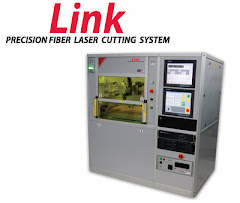
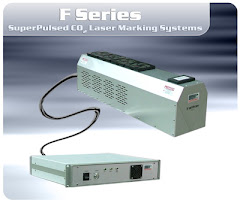
Laser Photonics, the industry leader in developing high-tech solid state and CO2 laser systems for marking, cutting and engraving applications, announced today that it has signed a Memorandum of Understanding (MOU) with Lissotschenko Mikrooptik (LIMO), the worldwide market leader in solid state lasers to bring new products to fruition.
Pairing up to manufacture the most advanced technology equipment by combining LIMO’s solid state lasers with Laser Photonics systems, these newly developed products will be ideal for the aerospace, automotive, defense, electronic, filtration, industrial, medical and solar industries around the world. These systems will be used in high powered applications and other processes such as plastic welding, annealing coatings and marking. The new products will be manufactured by Laser Photonics experienced designers and engineers, using the highest quality components, and proven technology.
“This strategic collaboration provides an excellent fit for our strategy of developing innovative laser solutions for numerous applications and industries,” said Todd Hockenberry, executive vice president of sales and marketing for Laser Photonics.
Laser Photonics is continually developing new systems to solve new problems using solid state lasers. As technology changes, and as new industries grow—Laser Photonics develops systems around the solid state laser technology to address these ever-changing issues.





.jpg)
Clr09_400px.jpg)


 Posts
Posts


